Heavenly Creation Nursery
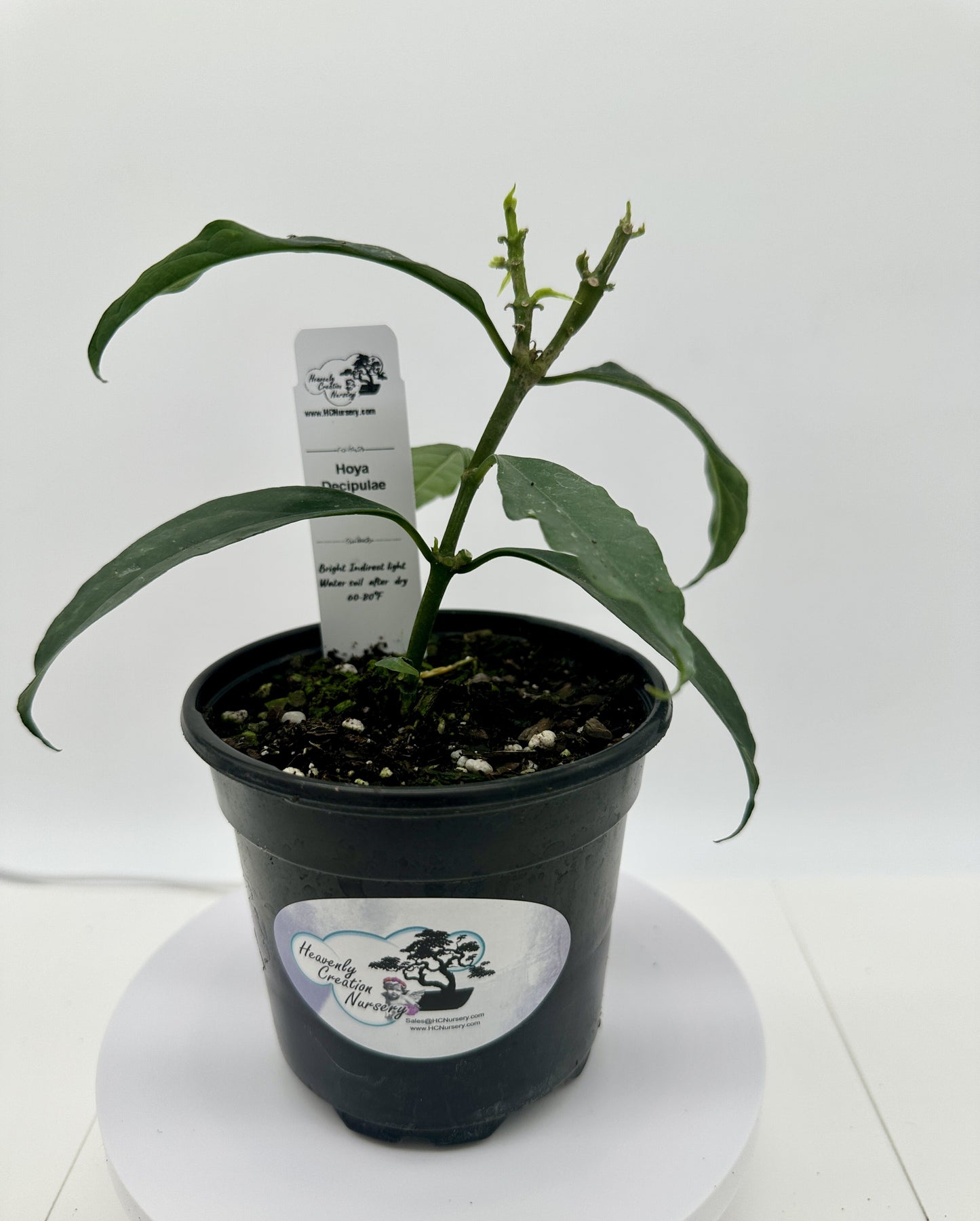
Decipulae - Live Hoya 4" Very Rare
Decipulae - Live Hoya 4" Very Rare
Couldn't load pickup availability
Hoya decipulae is a distinctive live Hoya grown for its unusual elongated green leaves and distinctive growth. Its climbing habit makes it attractive as a tropical wax plant. Mature plants may produce distinctive waxy flowers with a narrow, elongated form; flowering depends on maturity and growing conditions.
Botanical Name: Hoya decipulae
Foliage: Unusual elongated green leaves and distinctive growth
Flowers: Distinctive waxy flowers with a narrow, elongated form
Growth Habit: Climbing
Cold Weather Shipping
❄️ Cold Weather Shipping
To help protect your plants during cold weather, HCN may include:
- 🧤 Heat packs
- 📦 Insulated packing materials
These are provided at no additional cost when appropriate, based on weather conditions and the destination forecast.
🚫 Please note:
While we take precautions to protect plants during shipping, HCN cannot guarantee plants against damage caused by adverse weather, carrier delays, or carrier mishandling.
📸 If your plant arrives in poor condition:
Please take clear photos of the shipping box, packing materials, and affected plants and contact us within 24 hours of delivery so we can review the issue and assist you.
Care Instructions
🌿 Hoya & Dischidia Care Guide
💚 Classic, resilient, and beautifully unique. Often called “wax plants,” Hoyas are tropical plants loved for their distinctive foliage, climbing or trailing growth habits, and beautiful clusters of star-shaped flowers. Some produce wonderfully fragrant blooms, while others are especially prized for their unusual leaves.
☀️ Light
🌥️ Bright, indirect light is ideal for most Hoyas.
🌤️ Many tolerate gentle morning or late-afternoon sunlight.
🌸 Certain varieties, including Hoya Sunrise, can develop beautiful pink, red, or burgundy sun-stress coloration when exposed to brighter light.
🚫 Avoid harsh midday sunlight that can scorch leaves.
💧 Watering
💧 Allow the potting mix to dry partially between waterings, adjusting for the variety.
🌿 Thin-leaved Hoyas generally prefer more consistent moisture and should not remain completely dry for extended periods.
🪴 Thick, succulent-leaved Hoyas typically tolerate drying more thoroughly between waterings.
💦 Dischidia generally prefers an airy, well-draining mix with moderate drying between waterings, similar to thinner-leaved Hoyas.
⚠️ Avoid soggy soil and always ensure good drainage.
🪴 Soil Mix
🌱 Use a chunky, well-draining mix that allows airflow around the roots.
🧪 Suitable ingredients include orchid bark, coconut husk, perlite, pumice, and potting soil or coco coir.
🌼 Fertilizer
🧴 Feed approximately monthly during active growth with a diluted, balanced houseplant fertilizer.
❄️ Reduce or stop fertilizing when growth slows.
🌡️ Temperature & Humidity
🌡️ Most commonly grown Hoyas prefer 60–80°F (15–27°C).
💦 Moderate humidity works for many varieties, although some tropical species appreciate higher humidity.
🌬️ Maintain good airflow and protect plants from cold drafts.
Plant Information
🌿 Hoya & Dischidia Plant Information
💚 Beautiful foliage, fascinating flowers, and endless variety! Hoyas and Dischidias are tropical plants in the Apocynaceae family, prized by collectors for their unusual foliage, trailing or climbing growth habits, and distinctive flowers.
🌱 About Hoyas
🌿 Commonly called wax plants, Hoyas are native to tropical and subtropical regions of Asia, Australia, and the Pacific Islands.
🍃 Their foliage ranges from thin, delicate leaves to thick, succulent leaves. Depending on the variety, leaves may be smooth, fuzzy, textured, splashed with silver, or beautifully variegated.
🌸 Hoyas produce clusters of star-shaped flowers, often with a waxy appearance. Flower colors, shapes, sizes, and fragrances vary considerably by species and cultivar.
🌺 Many Hoyas flower from persistent structures called peduncles, which can produce additional blooms over time. Avoid removing these after flowering unless they have died back.
🌿 Growth habits vary from compact and trailing to vigorous climbing vines. Some varieties benefit from trellises, while others look beautiful in hanging baskets.
🍃 About Dischidia
🌱 Dischidia is a separate genus closely related to Hoya, with many species naturally growing as epiphytes on trees.
💚 Dischidia bengalensis is valued for its attractive trailing foliage and compact leaves, making it a lovely choice for hanging displays.
🌼 Dischidia can produce small flowers, although its foliage and growth habit are often the primary attraction.
🌸 What Makes Each Variety Special?
✨ Every Hoya and Dischidia variety has its own characteristics, including leaf shape, texture, coloration, growth habit, and flowering behavior.
☀️ Some Hoyas develop additional pink, red, or burgundy foliage coloration under brighter light, a characteristic commonly called sun stress.
🔎 Explore each plant's individual description for details about its foliage, flowers, fragrance, growth habit, and other distinguishing features.
Share